
Essential Dust Collector Maintenance Tips for Peak Performance
Quick Answer:
To maintain a dust collector, follow a preventative maintenance plan with daily, weekly, monthly, and yearly inspections. Keep compressed air at the right pressure, inspect filters for leaks and tears, empty the hopper regularly, watch for visible emissions, change filters before exceeding the maximum pressure drop, and check the exhaust fan, structure, cleaning system, and ductwork. Regular maintenance extends filter life, protects air quality, and reduces fire and explosion risks.
Table of Contents
- Understanding the Impact of Regular Maintenance
- Create a Maintenance Plan
- Compressed Air Pressure
- Dust Collector Filter Media
- Don't Forget to Empty the Hopper
- Look for Emissions
- Don't Exceed Pressure Drop
- Choose the Proper Exhaust Fan
- Structural Quality
- Check That the Cleaning System Is Functioning
- Ductwork Systems
- Frequently Asked Questions
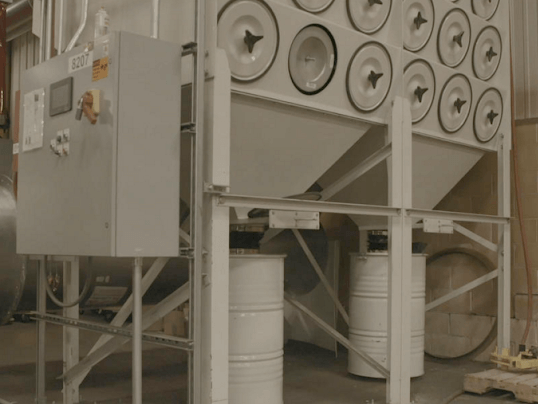
Dust collectors are key to maintaining good air quality in industrial work environments by effectively removing airborne contaminants. After a dust collection system is installed, there is typically very little upkeep required, although the exact maintenance frequency depends on how heavy the application is.
A dust collection system will continually perform well as long as it's maintained regularly.
To guarantee that your dust collectors are operating effectively, it is vital to remain updated on maintenance, including regularly changing filters, paying attention to overfilled dust bins, and monitoring airflow and system pressure.
Understanding the Impact of Regular Maintenance
Safety is another concern with dust collection systems — dust accumulation can present risks of combustion, leading to fires and explosions. Measures like proper grounding, installing explosion isolation valves and high speed abort gates, and routinely inspecting equipment for leaks are essential. Additionally, properly training staff and keeping a maintenance log will help further reduce the chance of hazardous accidents.
Follow these ten maintenance tips to ensure that your dust collector operates to its full potential:
1. Create a Maintenance Plan
It's important to have a preventative maintenance plan in place to guarantee that the dust collection system's components are working properly and, if not, replacing any damaged or broken elements, and taking corrective action if the operation process is unlike design conditions.
We recommend keeping a record of daily, weekly, monthly, and yearly inspection logs as directed in the manufacturer's manual.
Daily
Weekly
Monthly
Yearly
Log every inspection, at the intervals your manufacturer's manual directs.
2. Compressed Air Pressure
One of the most critical aspects of maintaining dust collectors is compressed air. There are a few factors that ensure compressed air is up to standard:
- High-quality air pressure is key to ensuring the best clean.
- If the pressure is too low, cartridges are not adequately cleaned, resulting in saturation.
- If compressed air pressure is too high, cartridges will be used and replaced more frequently.
- The power of the compressor needs to be strong enough to supply air at a constant pressure throughout maximum production and when operators require high levels of compressed air.
Too low
Cartridges aren't cleaned properly and become saturated.
Too high
Cartridges wear out and need replacing more often.
3. Dust Collector Filter Media
Inspect the clean-air side of the dust collector for leaks and the bag filter for tears.
The filter media is the most important element because it collects and controls the dust. If pressure drop within a collector becomes high, it may be due to excessive dust buildup or blinding of filters.
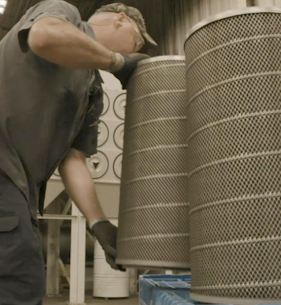
Our dust collector replacement filters feature a pleated design that provides more surface area than traditional baghouse bag filters. Because of their design, cartridge filters allow air to flow through them easily while capturing dust particles more efficiently. When you shop with us, you can buy with confidence. If your expectations aren't met, we will replace your filter at no cost!
Buy With Confidence: If your expectations aren't met, we'll replace your filter at no cost.
4. Don't Forget to Empty the Hopper
Hoppers may be used to direct collected dust to storage containers or transport systems, but they aren't meant for storage.
It's important to check and empty the dust bin regularly to prevent bridging. Bridging traps dust in the hopper and can raise the pressure drop in the dust collector.
5. Look for Emissions
Keep an eye out for particulates that are discharged from the exhaust stack. Visible emissions suggest a tear in a seal or filter.
If you notice emissions leaking, it's imperative to find the tear, as leaks create health risks, property and equipment damage, and possible fines. It's recommended to integrate a broken bag detector that alerts staff of bag failure or leaks.
Pro tip: A broken bag detector alerts your staff to filter failures and leaks right away, before visible emissions become a health risk or a fine.
6. Don't Exceed Pressure Drop
When filter bags accumulate dust, some particulate becomes ingrained into the filter media and increases the pressure drop. The airstream that filters through this dust collects the fine particulate with high efficiency. High differential pressures can cause filter media to bleed, impeding the dust collector's ability to capture dust and allowing it to escape into the surrounding environment.
4.8–6 in. w.g.
When differential pressure reaches this range, or goes above maximum specifications, it's time to change the filter.
- When airflow reaches a differential pressure of 4.8–6 in. w.g., or goes above maximum specifications, it's time to change the filter.
- Differential pressure is the amount of static resistance across filters when operating a positive or negative pressure dust collector.
- A pressure drop is generally measured in inches of water column, or w.c., and indicates the amount of dust collected on filter media and the condition of filters.
7. Choose the Proper Exhaust Fan
An exhaust fan is used to quickly send ventilation air from the hood or point of pick-up through the ductwork and dust collector filter and out of the exhaust stack. To determine which exhaust fan meets SCFM requirements, calculate the pressure drop by gauging the static resistance of ductwork, the dust collector, and hoods or pick-up points.
8. Structural Quality
The quality of a dust collector's structure can affect performance and maintenance, and reduce equipment life. It's important to inspect welds, joints, and flange seals. All leaks should be sealed mechanically or with silicone caulking.
In a positive pressure system, dust will blow out of the collector, creating a potential risk to employees. In a negative pressure system, a tear in a seal or weld will allow ambient air to enter the collector, bringing in moisture and contaminants.
Structural Inspection Checklist
- ✓ Make sure all fasteners are in place and tightly fastened.
- ✓ Check the structure for excessive corrosion and signs of weakness.
- ✓ Replace and re-weld any components that have cracked welds, such as bolts, cross bracing, or gussets.
- ✓ Closely evaluate the filter's external walls for corrosion or bowing.
- ✓ Repair holes in the dust collector walls or hopper.
9. Check That the Cleaning System Is Functioning
Reverse air, pulses, and shakers are all used to loosen up dust from filter media. If the system that your dust collector uses is not properly functioning, dust will continue to build, resulting in an increased pressure drop and a decreased volume of ventilation air.
If the situation escalates, airstream velocities will reduce, causing a dropout of dust in the ducts, which can interrupt the entire system.
10. Ductwork Systems
Another important element in a dust collection system is the ductwork. Without ducting, particulates will not be able to reach the baghouse and the dust collector will not perform efficiently.
It's recommended to regularly check ductwork for dust accumulation. Implementing clamp-together, or quick-fit ducting, allows operators to easily disassemble ductwork for inspection and cleaning.
Time for New Filters?
Enter your OEM part number or dimensions and we'll find the right replacement. Use the Filter Finder →
FAQs: Dust Collector Maintenance and Replacement Filters
What maintenance does a dust collector need?
A dust collector needs a preventative maintenance plan with daily, weekly, monthly, and yearly inspections. Key tasks include checking compressed air pressure, inspecting filters for leaks and tears, emptying the hopper, watching for emissions, monitoring pressure drop, and inspecting the structure, cleaning system, exhaust fan, and ductwork.
What causes high pressure drop in a dust collector?
High pressure drop is usually caused by excessive dust buildup or blinding of the filters. It can also result from a cleaning system that isn't working properly, low compressed air pressure, or dust bridging in a hopper that hasn't been emptied.
How do I know when it's time to replace my dust collector filters?
Replace filters when you see a significant increase in pressure drop, visible emissions from the exhaust stack, or reduced airflow. A differential pressure of 4.8–6 in. w.g., or a reading above the manufacturer's maximum, is a common signal it's time for new filters. Learn more about the signs it's time to replace dust collector filters.
How often should I replace my dust collector filters?
Replacement frequency depends on the type of dust being collected and how much dust your facility generates. Regularly inspecting pressure drop and emissions will tell you when replacement is due. Longer-lasting filters reduce how often you need to replace them.
What makes ACS replacement filters better than original manufacturer filters?
ACS replacement filters are engineered to meet or exceed the performance of original manufacturers like DustHog, Donaldson Torit, and Camfil Farr. Many use efficient nanofiber media for superior sub-micron particulate filtration and longer-lasting performance, at a lower price because there's no middleman.
Will replacement filters fit my existing dust collector?
Yes. ACS replacement filters are compatible with many popular dust collection systems, including DustHog, Donaldson Torit, Clark, and AAF. If you're unsure which filter fits, share your system details and our team will identify the right replacement.
Why is it important to use high-quality replacement filters?
High-quality replacement filters keep your dust collection system running efficiently, reduce the risk of system failure, improve air quality, and extend equipment life. ACS filters undergo rigorous testing to perform beyond industry standards.
What if I don't know which replacement filter I need?
Fill out the filter finder form with your dust collector's information, and an ACS specialist will guide you through identification and help you find the right filter for your system.
Why are ACS replacement filters more affordable?
ACS eliminates the middleman, offering replacement filters at a fraction of the cost of major brands. The filters are made to meet or exceed industry standards, so you get top-quality performance without the high price tag.
Have more questions? Visit our full FAQ page →
You may also like: