

Workplace Safety: 5 Essential Dust Collection System Precautions
Quick Answer:
Five key precautions make dust collection systems safer: change filters based on pressure drop and manufacturer guidance, use pulse/clean-on-demand cleaning, install NFPA-required explosion protection such as explosion venting, high-speed abort gates, and isolation valves, keep hoppers free of stored dust, and protect ductwork with isolation valves, spark detection/arrestance, and proper grounding. These steps reduce fire and explosion risks, prevent downtime, and support compliance.
Table of Contents
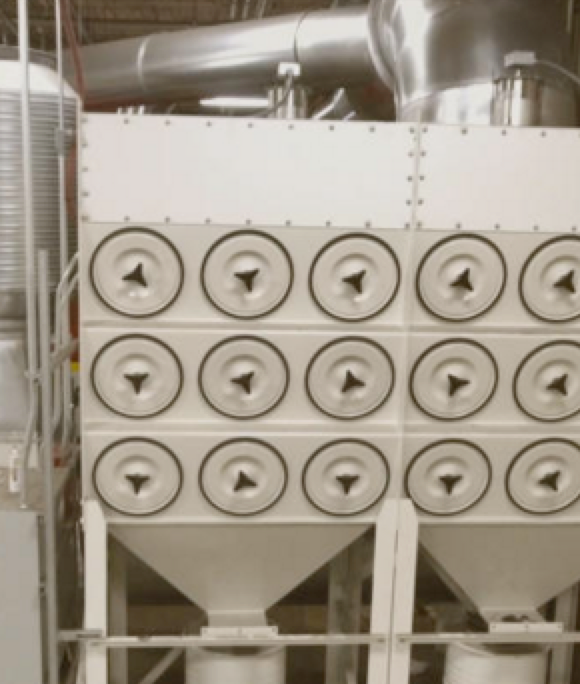
Dust exposure in manufacturing is more than just a compliance issue — it’s a matter of protecting your workforce and ensuring long-term operational success.
A well-maintained dust collection system doesn’t just meet safety standards — it enhances productivity, reduces downtime, and boosts employee morale. By proactively managing dust, you’re not only safeguarding your employees but also optimizing your operations for better efficiency and cost savings.
Let’s look at five essential precautions that can make your workplace safer and your dust collection system more efficient.
5 Essential Dust Collection Safety Precautions
1. Stay Ahead with Timely Filter Changes

Dust collector filter changes will vary based on the application. Change your dust collector filters based on pressure drop and manufacturer guidance. When pressure drop stays high even after pulse cleaning, the filters are due for replacement. Certain dust collector cartridge filters can operate for up to two years or longer, while applications with heavy dust loads will require more frequent filter changes.
Our dust collector replacement filters are built to withstand high volume dust loads — providing a longer filter life and air that stays within typical OSHA exposure limits when properly applied.
Benefit: Changing filters based on pressure drop and manufacturer guidance reduces the risk of clogged filters, improving system efficiency and air quality. This proactive step minimizes unplanned downtime and costly repairs, helping to maintain optimal production levels and reducing overall maintenance costs.
2. Maximize Efficiency with Pulse/Clean on Demand

Dust build-up increases the pressure drop across the cartridge filters. The pressure drop is constantly monitored by a photohelic switch/gauge, and when it exceeds a preset limit, the gauge activates a cleaning cycle — the valves pulse. Because filters are only cleaned when they need it, clean on demand saves compressed air and reduces wear on the filter media.
Benefit: Utilizing pulse/clean on demand keeps filters cleaner for longer, reducing the frequency of filter replacements and ensuring continuous system performance. This leads to less downtime, lower maintenance expenses, and prolonged filter lifespan, while maintaining air quality and compliance.
3. Protect Your Facility with Explosion Protection

Various NFPA standards require that dust collection systems have a way to prevent the transmission of energy from a fire or explosion to a building or work facility. Explosion venting protects the collector itself, while isolation devices keep a fire or explosion from traveling through the ductwork. No-return valves go on the inlet duct; high-speed abort gates go on the clean-air return.
- Explosion Vents safely release the pressure of a deflagration from the dust collector to a safe area, limiting damage to the collector and surrounding equipment.
- High-Speed Abort Gates are installed on the clean-air return and prevent hazardous air from returning into work environments by automatically venting it to the atmosphere, should a fire and/or explosion occur.
- Explosion Isolation Devices may be required on suction-side ducts that transport material with a Kst value above zero, depending on your dust hazard analysis. Installing no-return valves on the inlet duct protects employees and facilities from the damaging impact of a dust collector explosion.
Benefit: Installing explosion protection measures like explosion venting, high-speed abort gates, and isolation valves not only safeguards your workers but also prevents costly damage to equipment and structures. This minimizes the risk of production stoppages, avoids fines due to safety violations, and ensures long-term operational continuity.
Kst Value Above Zero? You May Need Isolation.
Explosion isolation devices may be required on suction-side ducts carrying combustible dust, depending on your dust hazard analysis.
4. Ensure Safety by Keeping Hoppers Dust-Free

Hoppers are designed to funnel dust into a storage bin, not to store dust.
When dust accumulates in a hopper, there is a potential risk of fire or deflagration. Dust left in the hopper also re-entrains onto the filters, driving up pressure drop so pulse cleaning can't keep up and filters blind early.
Benefit: Dust accumulation in hoppers can lead to hazardous conditions, including fires or explosions. Keeping hoppers dust-free reduces these risks, preventing downtime and costly damage to both your dust collection system and facility. It also supports compliance with safety regulations, safeguarding your workforce.
5. Safeguard Your Ducting Systems for Long-Term Reliability

Dust collection ductwork draws particulate away from industrial processing machines to filter and clean air that is either returned to the work environment or exhausted outside of the facility.
When handling combustible dust, the NFPA (National Fire Protection Association) requires that dust collector ductwork is protected. Isolation valves, spark detection/arrestance, and proper grounding safeguard ducting systems from the risk of fire or deflagration.
Benefit: Properly maintaining your ductwork prevents leaks and blockages that can reduce system efficiency. This ensures that your dust collection system works at peak performance, avoiding costly repairs and minimizing the risk of hazardous dust buildup. Keeping ducting systems in optimal condition leads to increased system longevity and energy savings.
With these tips, you can significantly reduce risks. It is also essential to stay updated on the latest safety standards and best practices in your industry. Get in touch with our specialists if you have any questions about replacement dust collector filters and safety measures.
Questions About Filters or Safety Measures?
Our specialists can help you choose the right replacement filters for your system. Request a Quote →
Frequently Asked Questions
How can I make my dust collection system safer?
Change filters based on pressure drop and manufacturer guidance, use pulse/clean-on-demand cleaning, install explosion protection such as explosion venting, high-speed abort gates, and isolation valves, keep hoppers free of stored dust, and protect ductwork with isolation valves, spark detection/arrestance, and proper grounding.
How often should dust collector filters be changed?
Change filters based on pressure drop and manufacturer guidance. Some cartridge filters can operate for up to two years or longer, while applications with heavy dust loads require more frequent changes.
What is pulse/clean on demand in a dust collector?
Pulse/clean on demand uses a photohelic switch or gauge to monitor the pressure drop across the filters. When the pressure drop exceeds a preset limit, the gauge triggers a cleaning cycle that pulses the filters. Cleaning only when needed saves compressed air, reduces wear on the media, and extends filter life.
What explosion protection does a dust collector need?
NFPA standards require dust collection systems to prevent energy from a fire or explosion from transmitting into the facility. This often means explosion venting on the collector, no-return valves on the inlet duct, and high-speed abort gates on the clean-air return. Explosion isolation devices may be required on suction-side ducts carrying material with a Kst value above zero, depending on your dust hazard analysis.
What is a high-speed abort gate?
A high-speed abort gate is a safety device installed on the clean-air return that automatically vents air to the atmosphere if a fire or explosion occurs, preventing hazardous air from returning into the work environment.
Why shouldn't dust be stored in a dust collector hopper?
Hoppers are designed to funnel dust into a storage bin, not to hold it. Dust that accumulates in a hopper creates a risk of fire or deflagration, and it re-entrains onto the filters, driving up pressure drop so filters blind early.
How do you protect dust collection ductwork?
When handling combustible dust, the NFPA requires dust collector ductwork to be protected, typically with isolation valves, spark detection/arrestance, and proper grounding to guard against fire or deflagration. Regular maintenance to prevent leaks and blockages also keeps the system efficient and reduces hazardous dust buildup.
Have more questions? Visit our full FAQ page →
You may also like: