
Air-to-Cloth Ratio: The Key to Efficient Dust Collection
Quick Answer:
Air-to-cloth ratio, also called filter velocity, is a dust collector's airflow in CFM divided by its total square feet of filter media. For example, 3,000 CFM ÷ 1,000 sq ft of media = a 3:1 ratio. Applications with heavier dust loads need lower ratios (more filter media). Too little media causes dust buildup, higher pressure, shorter filter life, and system malfunctions.
Table of Contents
What Is Air-to-Cloth Ratio?

Air-to-cloth ratio, also known as filter velocity, is the amount of airflow (CFM) divided by the amount of filter media in a dust collector. It allows you to know how much air is flowing through each square foot of media and will help you determine which filters are most efficient for your application.
How to Calculate Air-to-Cloth Ratio
If a collector with 3,000 CFM has 1,000 sq ft of media, the air-to-cloth ratio is 3:1. Generally, applications that produce higher particulate volumes require more filter media to maintain optimal filter velocity. The EPA’s Pulse-Jet Fabric Filter Fact Sheet outlines how higher dust loads require lower air-to-cloth ratios for effective performance.
The Formula
Airflow (CFM) ÷ Filter Media (sq ft) = Air-to-Cloth Ratio
Example: 3,000 CFM ÷ 1,000 sq ft = 3:1
If the air-to-cloth ratio does not provide enough filter media, dust will accumulate in the filters, causing negative pressure to build and resulting in reduced filter life and system malfunctions.
Rule of thumb: the heavier the dust load, the lower the ratio you need, which means more filter media for the same airflow.
Why Does Air-to-Cloth Ratio Matter?
- ✓ The proper filter velocity will extend filter life
- ✓ Your filters will operate more efficiently
- ✓ You'll save on system maintenance costs
- ✓ You won't waste money on excess filter media
Why Shop With Us?

Countless industries depend on cartridge filters to clean the air in their facilities and workshops. Our dust collector filters are designed to withstand high-volume dust loads so that we can guarantee the demands of your application are met.
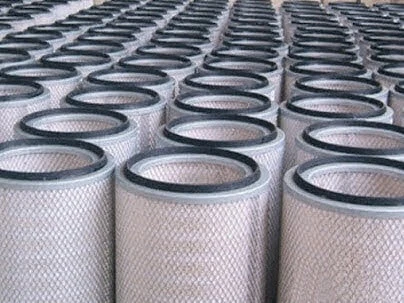
Dust collector cartridge filters feature a pleated design that provides more surface area than bag filters. Because of their design, cartridge filters allow air to flow through them easily while capturing dust particles more efficiently.
Dust Collector Cartridge Filter Benefits
- Longer lasting filters, fewer filter changes
- Easily removable for fast filter changes
- Easy to clean
- Moisture-resistant
- Can withstand high temperatures
- The pleated design provides a larger surface area and more particle collection
The air-to-cloth ratio in a dust collector is critical for the operation capacity and efficiency of the system. When choosing a dust collection system, the air-to-cloth ratio must meet the requirements of various factors including the type and concentration of dust and the machining processes taking place. Our specialists can help you determine which replacement dust collector cartridge filter best meets the needs of your application.
Not Sure Your Ratio Is Right?
Our specialists will help you choose filters with the right media for your airflow and dust load. Request a Quote →
Frequently Asked Questions
What is air-to-cloth ratio in a dust collector?
Air-to-cloth ratio is the amount of airflow (CFM) moving through a dust collector divided by the total square feet of filter media. It shows how much air passes through each square foot of media.
How do you calculate air-to-cloth ratio?
Divide the dust collector's airflow in CFM by the total square feet of filter media. For example, a collector moving 3,000 CFM with 1,000 square feet of media has an air-to-cloth ratio of 3:1.
Is air-to-cloth ratio the same as filter velocity?
Yes. Air-to-cloth ratio and filter velocity are two names for the same measurement: the rate at which air moves through each square foot of filter media.
What is the right air-to-cloth ratio for my application?
The right ratio depends on the type and concentration of dust and the processes involved. Applications with heavier dust loads generally need a lower ratio, meaning more filter media for the same airflow. ACS specialists can help determine the right filters for your system.
What happens if the air-to-cloth ratio is too high?
A ratio that is too high means there isn't enough filter media for the airflow. Dust accumulates in the filters, pressure builds, filter life shortens, and the system can malfunction.
Why are pleated cartridge filters effective for dust collection?
Pleated cartridge filters pack more filter media surface area into the same space than bag filters. That extra media lets air flow through easily while capturing more dust particles, which supports a healthier air-to-cloth ratio.
Have more questions? Visit our full FAQ page →
You may also like: